
Why Your Patio Floods, and How Proper Drainage Fixes It
A patio that holds water after every shower is not just annoying, it is usually a sign the drainage was never done properly.
Standing water causes real damage over time. It softens the sub-base beneath the paving, loosens pointing and jointing, and creates slippery surfaces that are a hazard in autumn and winter. If your patio puddles every time it rains, the problem is almost always in how it was installed, not in the weather.
Why Patios Flood and What Causes Standing Water
Surrey gets a reasonable amount of rainfall across the year, and the heavy clay soil found across much of the county makes things worse. Clay does not drain freely. Water sits on top of it rather than soaking away, which means a patio laid over clay ground needs proper drainage built in from the start.
Several things cause a patio to hold water, and most of them come down to poor installation.
No fall, or the wrong fall. Every patio needs a slight gradient, usually around 1:60, to move water away from the house and towards a drain or permeable edge. If the patio was laid flat, or if the fall runs back towards the building, water has nowhere to go.
A solid, impermeable surface with no outlet. Many older patios were laid straight onto compacted ground with no drainage channel or soakaway. Water reaches the paving, cannot get through it, and pools on top.
Heavy clay sub-base. In Surrey, many gardens sit on clay-heavy ground. Even if the patio has a fall, if the water runs off the edge and straight onto clay, it will back up and find its way back onto the surface or under the slabs.
Sunken or uneven slabs. When a sub-base fails, individual slabs drop or tilt. Water collects in the low spots. This is common on patios that were not bedded on a properly prepared and compacted base.
Blocked or absent drainage channels. Some patios have linear drains or channels, but if these are undersized, blocked with debris, or positioned in the wrong place, they stop doing their job quickly.
Any one of these problems can cause flooding. In practice, many patios have two or three of them combined.
How Correct Falls, Joints, and Drainage Solve It
Good patio drainage is not complicated, but it requires planning before a single slab goes down.
Getting the fall right. The most important step is setting the correct gradient across the whole patio. Water should always run away from the house and towards a defined outlet. On a larger patio, this sometimes means a dual fall, with water moving towards a central channel or two separate edges. The gradient needs to be consistent, which means the sub-base and bedding layer both have to be graded accurately before laying begins.
Choosing the right jointing. Permeable jointing compounds allow water to pass through the gaps between slabs and into the sub-base rather than sitting on the surface. On a patio with a good fall, standard pointing works well. On a patio where some surface water is inevitable, permeable jointing gives water a second route off the surface.
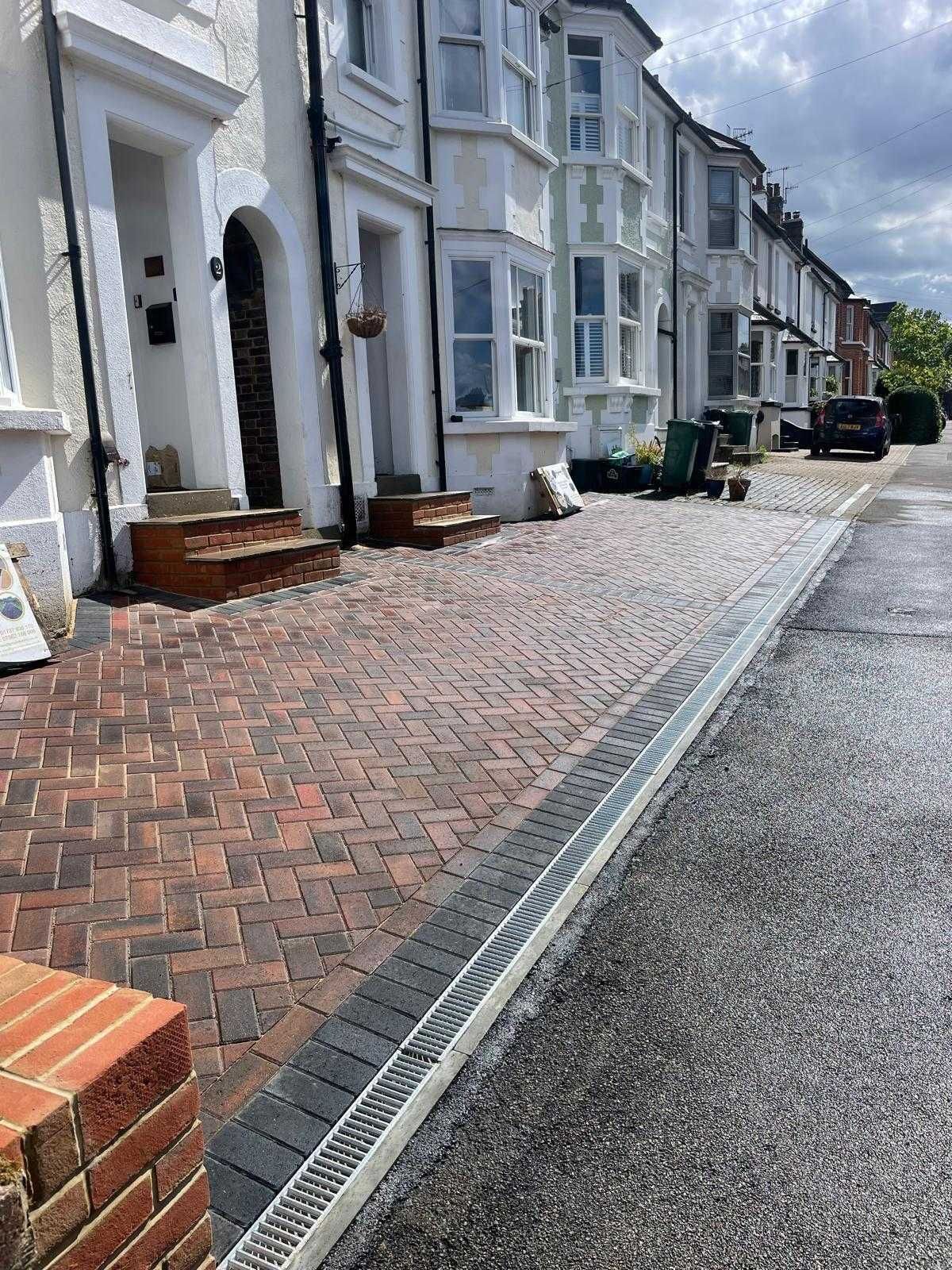
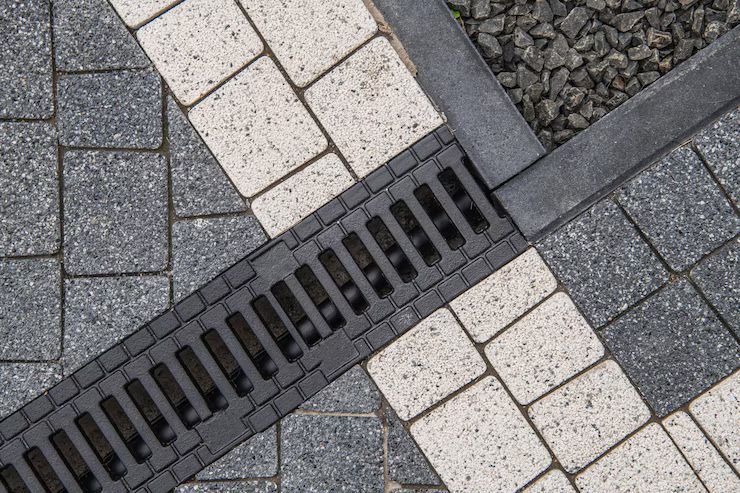
Installing a drainage channel or linear drain. A linear drain sits flush with the patio surface and collects water running across it. Positioned at the lower edge of the fall, it intercepts water before it reaches the lawn, a boundary wall, or the house wall. The drain connects to a soakaway or the surface water drainage system. Sizing it correctly for the area it needs to serve matters. A channel that is too narrow will overflow in heavy rain.
Soakaways and sub-base drainage. On clay ground, a soakaway needs to reach below the clay layer to work properly. This is where
groundworks experience counts. Digging a soakaway that actually drains, rather than one that just fills with clay-bound water, requires knowing the ground conditions and sizing the pit correctly.
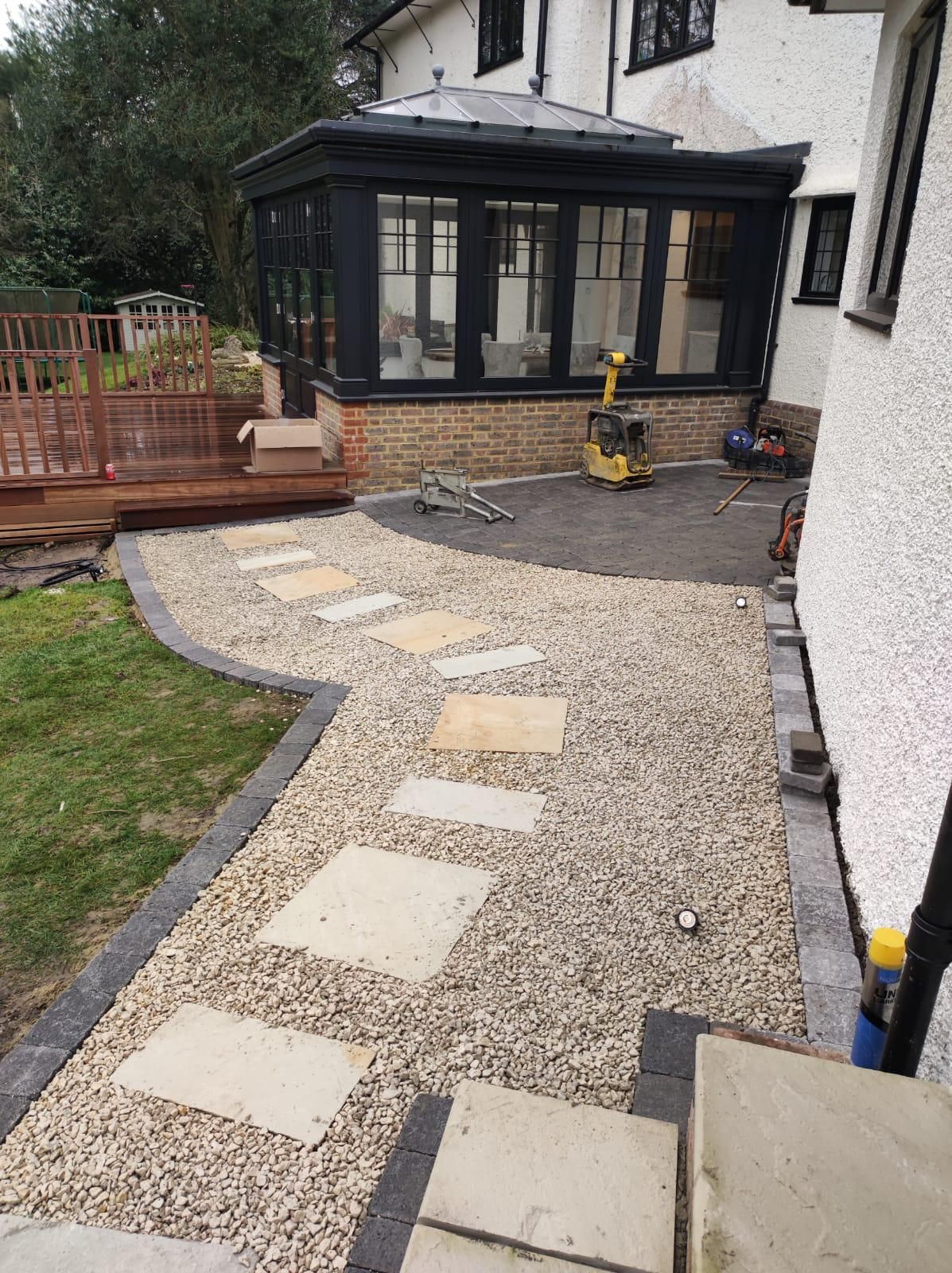
Permeable sub-base construction. On sites with poor natural drainage, laying a permeable sub-base of crushed aggregate rather than compacted clay allows water that does get through the surface to move freely until it reaches the soakaway or drainage outlet.
These elements work together. A patio with a correct fall, good jointing, a properly sized channel, and a working soakaway will drain cleanly after even a heavy Surrey downpour.
Fixing an Existing Patio or Building a New One That Drains Properly
If your current patio floods, you have two realistic options: improve the drainage on what is already there, or take it up and start again properly.
Improving an existing patio. If the patio is otherwise in good condition, it is sometimes possible to add a linear drain at the low point, re-bed any sunken slabs, and re-grade the fall across part of the surface. This works when the main problem is a missing outlet rather than a fundamentally wrong gradient or a failed sub-base. It is worth getting a proper assessment before committing to remedial work, because patching a patio with a failed base rarely lasts.
Starting fresh. When the sub-base has failed, the falls are wrong throughout, or the patio is old and cracked, a full relay is usually the better investment. Done correctly the second time, a new patio should drain properly for decades. Our patios page covers the materials and finishes available, from natural stone to porcelain. The
patio cost guide gives a clear sense of what to budget before you request a quote.
We have been working on Surrey homes for over 20 years, and our own team handles every job. No subcontractors, no surprises on the final bill, and no guesswork on the drainage. We know the clay ground conditions across the county, and we build drainage in from the start rather than treating it as an afterthought.
If your patio is holding water and you want to know what fixing it would involve, get in touch for a free, no-obligation quote. Call 01737 936037 or use the form on our
contact page.